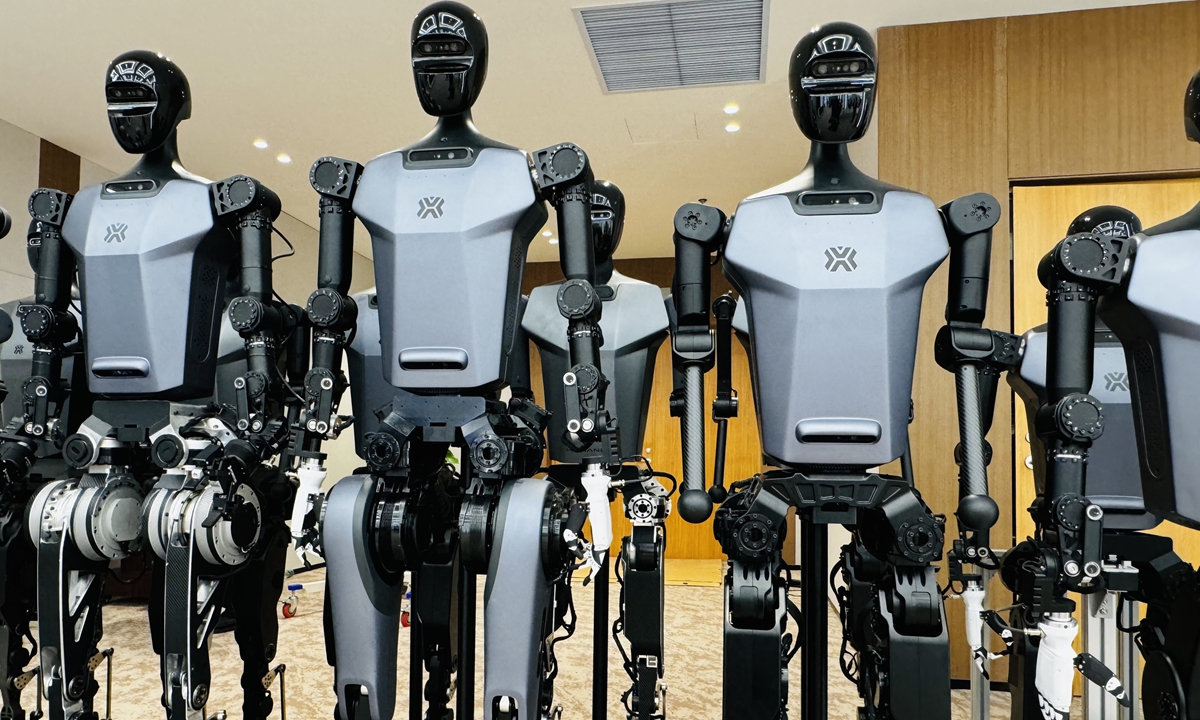
Humanoid robotics are poised to revolutionize industries such as healthcare, manufacturing, logistics, and services by delivering advanced dexterity, precision, and human-like capabilities, according to a report released on Friday.
The report by GlobalData, a leading data and analytics firm, highlights that these human-like robots will help automate complex tasks, mitigate labor shortages, and improve operational efficiency across various sectors.
Saurabh Daga, Project Manager of Disruptive Tech at GlobalData, explained, “The rapid advancements in humanoid robotics mark a significant milestone in innovation. From water-powered biomimetic systems that replicate human anatomy to AI-driven robots that can learn and adapt to real-world tasks, these developments present extraordinary possibilities.”
“Breakthroughs in dexterity, energy efficiency, and real-time adaptability mean these robots are evolving beyond prototypes. They are becoming functional systems capable of replacing or enhancing human roles in various industries. As energy efficiency, modularity, and AI capabilities improve, humanoid robots are set to transform healthcare, automation, and labor-intensive industries, providing cost-effective, precise, and intelligent solutions to global challenges,” he added.
According to GlobalData’s Disruptor Intelligence Centre, key advancements in humanoid robotics are making it possible for robots to replicate human anatomy and movement through advanced biomimetic technologies. These innovations hold promise for applications in healthcare, prosthetics, and industrial automation.
The robots also feature increased flexibility and optional dexterous hands, with AI-powered autonomy that enables them to perform delicate tasks, making them ideal for both domestic and industrial use while addressing labor shortages.
Daga emphasized that beyond their industrial impact, humanoid robots are rapidly advancing in complexity by combining AI, biomimetic engineering, and real-time adaptability. However, challenges such as cost, scalability, and energy efficiency remain. Yet, he pointed out that “advancements in biomimetic technologies, AI integration, and modular systems are accelerating innovation.”
He concluded by stressing the importance of collaboration among developers, manufacturers, and researchers to fully unlock the potential of humanoid robotics and achieve widespread adoption.