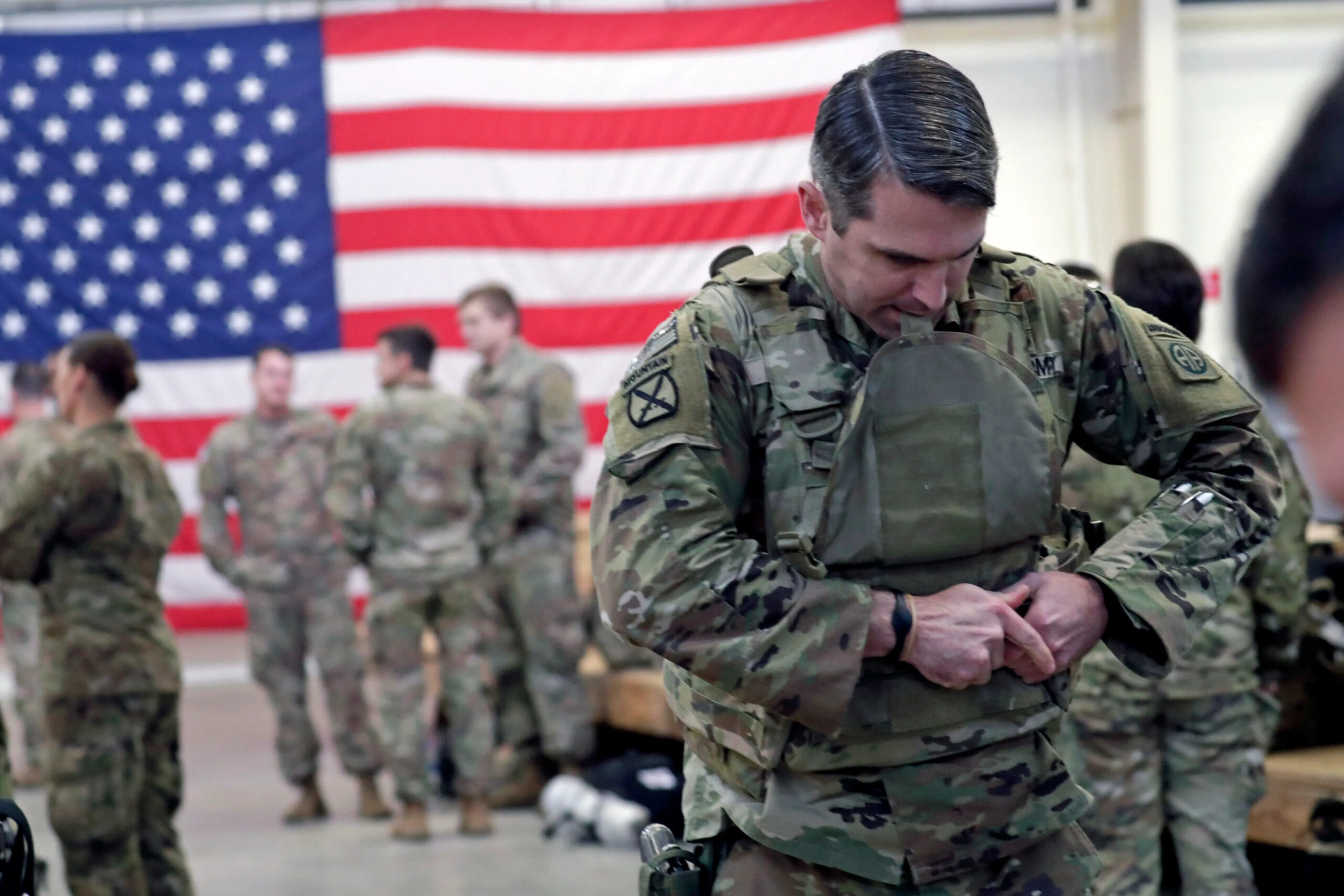
On Monday, U.S. officials informed Reuters that at least five American personnel were injured in an attack on a military base in Iraq. This comes as the Middle East anticipates a potential escalation of attacks by Iran and its allies following the recent killing of senior members of militant groups Hamas and Hezbollah.
According to two Iraqi security sources, two Katyusha rockets were fired at al Asad airbase in western Iraq. One source mentioned that the rockets landed inside the base. It remains uncertain whether this attack was related to Iran’s threats of retaliation following the killing of the Hamas leader.
U.S. officials, speaking to Reuters on condition of anonymity, reported that one of the injured Americans was in serious condition. They noted that the casualty count was based on initial reports and could still be updated.
One of the officials added that base personnel are carrying out a damage assessment following the attack.
Last week, Ismail Haniyeh, the political leader of the Palestinian Islamist group Hamas, was assassinated in Tehran, the Iranian capital. This attack prompted Iran to threaten revenge against Israel, which Iran has blamed for the killing, although Israel has not claimed responsibility.
Combined with the killing of Hezbollah’s senior military commander, Fuad Shukr, by Israel in a strike on Beirut last week, these incidents have heightened concerns that the Gaza conflict is escalating into a broader Middle East war.
Iran has attributed responsibility for Haniyeh’s assassination to the U.S., citing its support for Israel.
In a call on Monday, U.S. Secretary of Defense Lloyd Austin and Israeli Minister of Defense Yoav Gallant concurred that the attack represented “a dangerous escalation,” according to a Pentagon readout.
Last week, the U.S. conducted a strike in Iraq targeting individuals whom U.S. officials identified as militants preparing to launch drones and posing a threat to U.S. and coalition forces.
The U.S. has been monitoring whether Iran will follow through on its promise to retaliate for the killing of Haniyeh two days ago in Tehran. This incident is part of a series of assassinations of senior figures in the Palestinian militant group, occurring amid the ongoing conflict between Israel and Hamas in Gaza.
The Pentagon has announced plans to send additional fighter jets and Navy warships to the Middle East as Washington aims to strengthen its defenses in response to threats from Iran and its allies, Hamas and Hezbollah.
Iraq, a rare ally of both the U.S. and Iran, hosts 2,500 U.S. troops and is home to Iran-backed militias linked with its security forces. Since the Israel-Hamas war began in October, the country has experienced a surge in retaliatory attacks.
Iraqi sources have indicated that Iraq desires for troops from the U.S.-led military coalition to start withdrawing in September and to formally conclude the coalition’s operations by September 2025. Some U.S. forces are expected to stay on in a newly negotiated advisory role.
Since October 7, Baghdad has struggled to control Iran-backed armed groups that have carried out numerous attacks on U.S. forces in Iraq and neighboring Syria.
On Sunday, Iraqi Prime Minister Mohammed Shia al-Sudani had a conversation with U.S. Secretary of State Antony Blinken.
An Iraqi official stated that Blinken asked Sudani to help reduce regional tensions by persuading Iran to moderate its response to what it claims was an Israeli strike in Tehran that resulted in the killing of Hamas’ leader last week.
U.S. Army General Michael “Erik” Kurilla, the head of U.S. Central Command, is currently in the Middle East. According to one U.S. official, Kurilla is engaging with allies to ensure coordination in the event of an Iranian attack on Israel.