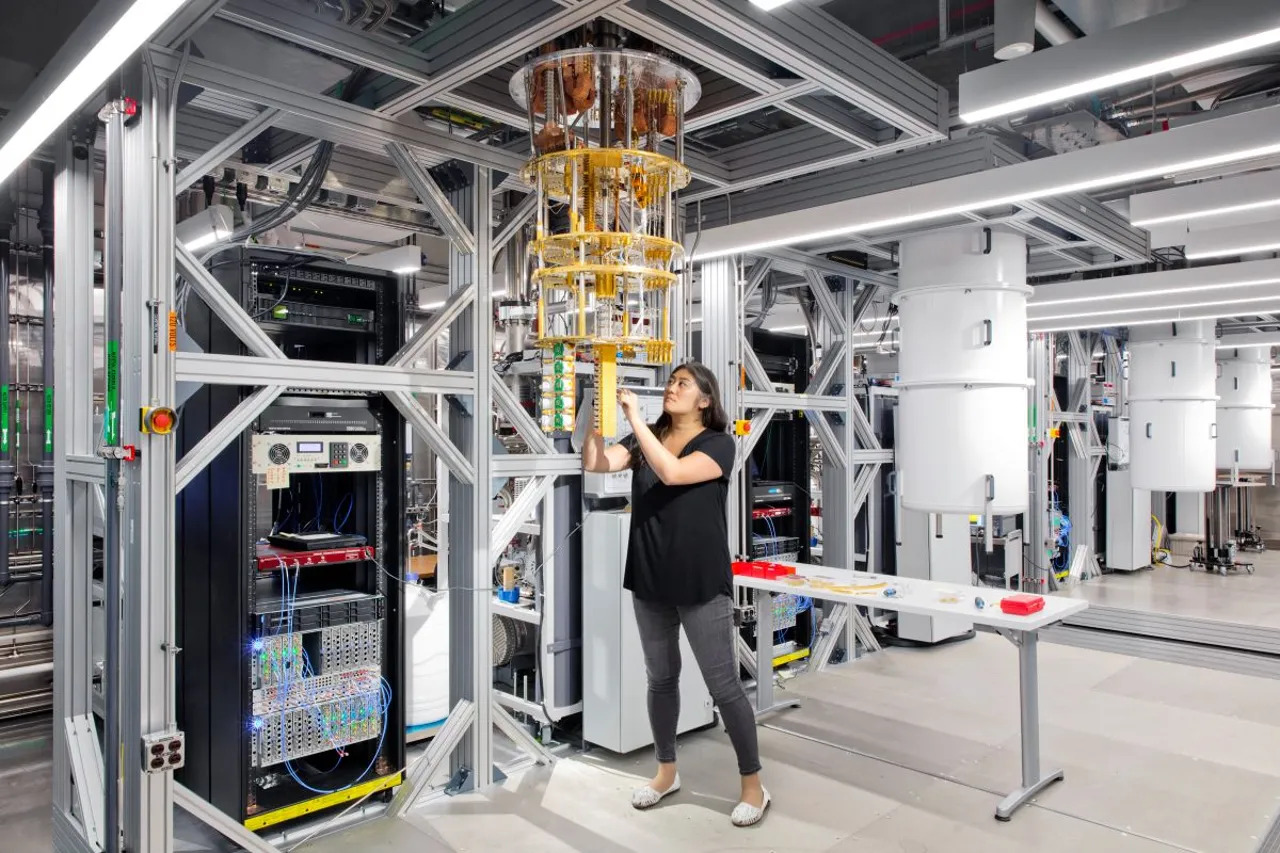
In the realm of technology, quantum computing stands poised at the frontier of a revolutionary leap forward. Unlike classical computers that rely on bits to process information as either 0s or 1s, quantum computers utilize quantum bits, or qubits, which can exist in multiple states simultaneously. This fundamental difference promises unparalleled computational power, with potential applications spanning across scientific research, cryptography, artificial intelligence, and more. This article delves into the transformative potential of quantum computing, exploring its principles, current advancements, and the future landscape it promises to reshape.
The Principles of Quantum Computing
At its core, quantum computing harnesses the principles of quantum mechanics to perform computations at speeds and scales far beyond the capabilities of traditional computers. While classical computers process information linearly, quantum computers leverage quantum superposition and entanglement to explore multiple solutions simultaneously. This parallel processing capability enables quantum computers to solve complex problems exponentially faster than their classical counterparts.
Current Advancements in Quantum Computing
Although still in its infancy, quantum computing has made significant strides in recent years, thanks to advancements in quantum hardware, algorithms, and error correction techniques. Major tech giants such as Google, IBM, and Microsoft, alongside leading research institutions and startups, are investing heavily in developing quantum hardware prototypes and optimizing quantum algorithms.
Key milestones include achieving quantum supremacy—a term indicating quantum computers outperform classical computers in specific tasks—and demonstrating quantum advantage in applications such as molecular simulation, optimization problems, and cryptography.
Potential Applications Across Industries
The potential applications of quantum computing span diverse fields:
- Cryptography: Quantum computers have the potential to break current encryption standards, prompting the development of quantum-resistant cryptographic algorithms.
- Drug Discovery: Quantum simulations can model molecular interactions with unprecedented accuracy, accelerating the discovery of new drugs and materials.
- Optimization: Quantum algorithms promise to optimize complex systems, such as supply chains, financial portfolios, and traffic routing, leading to significant efficiency gains.
- Artificial Intelligence: Quantum computing could enhance machine learning algorithms by enabling faster training of models and more complex pattern recognition.
Challenges and Considerations
Despite its promise, quantum computing faces several challenges:
- Hardware Reliability: Building stable quantum systems capable of maintaining qubits in coherent states (quantum coherence) remains a significant technical hurdle.
- Error Correction: Quantum systems are susceptible to errors due to environmental noise and decoherence. Developing robust error correction techniques is essential for scaling up quantum computing.
- Cost and Accessibility: Quantum computers are currently expensive to develop and operate. Ensuring accessibility and affordability for broader adoption remains a challenge.
The Future Landscape of Quantum Computing
Looking ahead, the future of quantum computing holds immense promise. Continued research and development are expected to yield more powerful quantum processors, improved qubit coherence times, and scalable quantum algorithms. As quantum computing matures, its integration into mainstream technology ecosystems could revolutionize industries, drive innovation, and tackle previously unsolvable challenges.
In conclusion, quantum computing represents a paradigm shift in computational power and capability. While still in its early stages, the rapid progress and growing interest from academia, industry, and governments worldwide underscore its potential to unlock new frontiers in science, medicine, finance, and beyond. As we navigate the complexities and opportunities of quantum computing, the journey towards harnessing its full potential promises to shape the future of technology in profound and unforeseen ways.